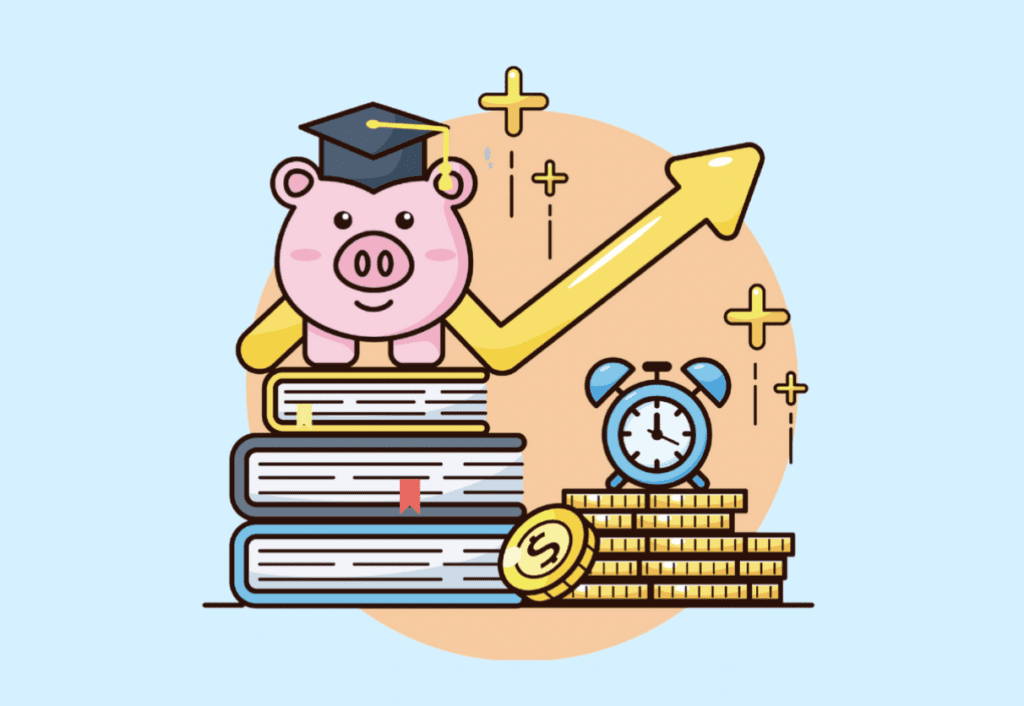

Preparing Kids for a Future That Isn’t Written Yet
Every August, the checklist looks the same: pencils, backpacks, first-day outfits. But underneath the supply list is a bigger question parents and educators rarely stop to ask out loud — are we actually preparing kids for the world they’re about to inherit?
Not just the next school year. The one after that. And the one after graduation, when “adulting” stops being a hashtag and starts being rent, paychecks, and decisions with real consequences.
The gap is real — and it’s growing.
According to the 2026 TIAA Institute–GFLEC Personal Finance Index, financial knowledge among U.S. adults has reached its lowest point in the survey’s ten-year history, with Americans correctly answering only 47% of the index’s questions on average. The picture is even more urgent for the next generation: Gen Z correctly answered only 38% of P-Fin Index questions, and their financial knowledge is consistently lower across every functional area measured — from saving and borrowing to understanding risk. Schwab + 2
This isn’t a knock on kids. It’s a signal. Financial and economic understanding isn’t something young people absorb by osmosis — it has to be taught, practiced, and reinforced, at school and at home.
The good news: parents are already leaning in.
A recent U.S. Bank survey found a major generational shift in how families approach conversations about money, with today’s parents reporting more comfort talking about money with their kids and a growing focus on helping them build financial skills early. The instinct is there. What’s often missing is a framework — a sense of what to talk about and when.
A few low-lift ways to put that instinct into action this school year:
- Narrate real decisions out loud. Grocery budgeting, back-to-school shopping trade-offs, “why we’re saving for this instead of buying that” — kids absorb far more from watching real decisions than from any worksheet.
- Give them a stake, even a small one. An allowance tied to saving goals, a say in a family budget line, a summer job — ownership builds financial confidence faster than lectures do.
- Talk about how people earn, not just what they earn. Curiosity about different careers, industries, and paths matters more than pressuring a kid to name their future job at age ten.
- Let them make (small) mistakes. A blown allowance or an impulse buy with their own money teaches more than a parent’s warning ever will.
Rethinking the “career path” conversation.
“What do you want to be when you grow up?” is a fun question — but it’s also an outdated one. The jobs many of today’s students will hold don’t exist yet, and industries are shifting faster than any single career plan can keep up with. A more useful question, for both parents and educators, might be: what problems does this kid like solving? Curiosity, adaptability, and financial confidence travel across careers in a way that a single job title never will.
So — is it worth it? Is all this early conversation, practice, and planning actually worth the effort? The research says yes, decisively. But “worth it” doesn’t mean guaranteeing an outcome. It means giving kids the tools to adapt, decide, and recover when things don’t go as planned — which, eventually, they won’t. That’s the real return on investment.
Where MCEE fits in.
This is exactly the gap MCEE was built to close. For students, the Maryland Stock Market Game™ turns abstract financial concepts into hands-on decision-making with real stakes, while the Personal Finance Challenge lets high schoolers apply what they’ve learned in competitive, real-world scenarios. For educators, our free classroom resources — reviewed by experienced teachers and tied to Maryland standards — make it easier to bring these conversations into any subject area, and our professional development offerings help teachers build the confidence to lead them.
Back-to-school season is a checkpoint, not just a calendar flip. Whether you’re a parent packing lunches or an educator planning your fall curriculum, there’s no better time to ask what financial and economic confidence could look like for the kids in your life — and to start building it, one small conversation at a time.
Ready to bring financial education into your classroom or district this fall? Explore MCEE’s programs and free resources at econed.org.
Explore MCEE’s professional development opportunities and educator resources at econed.org/professional-development. If you’re a district or school leader looking to strengthen economic and financial education, connect with MCEE. We’d love to support your educators and students.
https://www.econed.org/
Need teacher/student resources?: https://www.econed.org/student-programs/
Most Recent Articles